Phone:
(701)814-6992
Physical address:
6296 Donnelly Plaza
Ratkeville, Bahamas.
Phone:
(701)814-6992
Physical address:
6296 Donnelly Plaza
Ratkeville, Bahamas.

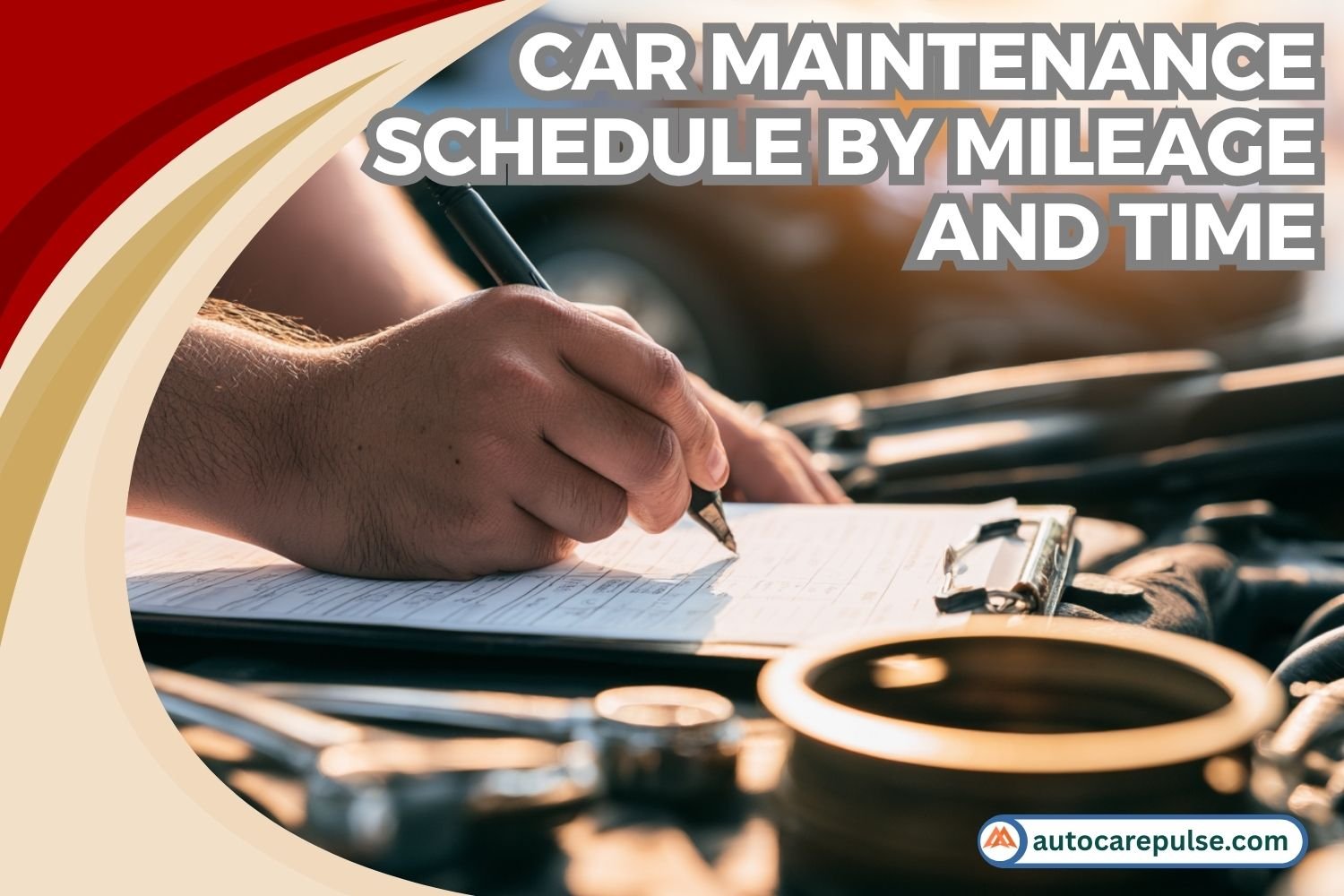
A car maintenance schedule by mileage and time helps vehicle owners determine when to service their cars based on distance driven or elapsed time, whichever comes first. Following the correct maintenance intervals can prevent premature wear, reduce unexpected repair costs, and extend your vehicle’s lifespan.
Whether you drive daily, take frequent road trips, or keep your car parked for long periods, understanding mileage-based and time-based service requirements is essential. From oil changes and fluid inspections to filter replacements and major component checks, following your manufacturer’s recommended schedule helps maintain performance, reliability, and warranty compliance.
For U.S. vehicle owners, assuming that maintenance is strictly tied to odometer mileage is a common and costly misconception when evaluating a car maintenance schedule by mileage and time. Motorists who drive low annual mileage often neglect time-based service intervals, mistakenly believing their engine oil or brake fluid remains pristine because the car sits in a garage.
Nitrile Gloves & Eye Protection: Protecting hands and eyes from cleaning solutions, isopropyl alcohol wipes, and sharp metal edges during the service of vehicle components.
The table below outlines service milestones, required service tasks, and primary ownership benefits when evaluating a car maintenance schedule by mileage and time metrics.
| Service Milestone (Miles/Time) | Required Service Tasks | Primary Ownership Benefit |
| Every 5,000 Miles or 6 Months | Synthetic oil change, filter replacement, tire rotation | Lubricates moving engine parts and prevents oil oxidation in low-mileage cars. |
| 30,000 Miles or 2 Years | Air filters, brake fluid flush, multi-point inspection | Restores engine airflow, removes moisture from braking hydraulics, and detects wear. |
| 60,000 Miles or 5 Years | Transmission fluid service, spark plugs, drive belts | Prevents transmission slippage and maintains ignition efficiency before rubber ages out. |
Reviewing these selection parameters helps prospective buyers align their vehicle dual-trigger care needs with factory specifications. Spotting these classification markers early tells you precisely what elements of assessing car maintenance schedules by mileage and time metrics to anticipate. Identifying the exact nature of your vehicle’s operational layout ensures your subsequent service choices target the correct performance tier before service commitments are finalized. Selecting proper knowledge regarding car maintenance schedule by mileage and time options prevents errors during routine marketplace comparisons.
Automotive fluids oxidize, absorb moisture, and break down chemically over time regardless of how many miles accumulate. By adhering to a dual-trigger car maintenance schedule by mileage and time, vehicle owners protect internal components from chemical corrosion, seal degradation, and sludge formation. Executing these routine checks ensures reliable, clean vehicle performance on demand.
Comparing vehicle owners who follow a dual-trigger schedule with those who only track mileage highlights why time-based upkeep matters when choosing options for a car maintenance schedule by mileage and time. Following a disciplined dual-trigger maintenance schedule shields your budget from expensive corrective repairs.
The table below contrasts scheduling approaches, operational habits, and long-term mechanical outcomes when choosing options for a car maintenance schedule by mileage and time.
| Scheduling Approach | Operational Habit | Long-Term Mechanical Outcome |
| Dual-Trigger Adherence | Servicing components whenever either the mileage limit or calendar time is reached first. | Prevents chemical oxidation, protects rubber seals, and maximizes powertrain life. |
| Mileage-Only Tracking | Ignoring time intervals because the odometer mileage target has not been met yet. | Allows brake fluid to absorb dangerous moisture and engine oil to oxidize in low-use cars. |
| Total Schedule Neglect | Running a vehicle without servicing fluids or filters until breakdown occurs. | Results in catastrophic engine seizure, expensive towing, and roadside emergencies. |
Why Material Selection Matters to Long-Term Ownership Longevity. Utilizing high-grade full-synthetic motor oils, moisture-resistant brake fluids, and robust rubber timing belts ensures proper performance and chemical stability across diverse operating environments. Similarly, utilizing manufacturer-specified dual-trigger intervals safeguards internal metal components and elastomer seals against chemical breakdown and early degradation. Selecting durable vehicle maintenance supplies and adhering to strict calendar and mileage limits provides long-term financial predictability, particularly for owners planning to keep their vehicle well past its warranty coverage period.
Proper vehicle detailing, tool organization, and professional hardware inspection for dual-trigger service scheduling require basic physical and digital tools. Essential equipment for examining and installing items when evaluating car maintenance schedule by mileage and time optimization includes a digital calendar tracking app, an odometer mileage logbook, a digital tire pressure gauge, a metric socket wrench set, clean shop rags, and heavy-duty rated jack stands. Having proper tools impacts evaluations when attempting home maintenance versus visiting a professional certified shop. Knowing your tool limitations affects expenses related to fitting components yourself versus paying professional shop labor fees.
Evaluating low-mileage garage cars against high-mileage commuters under dual-trigger schedules when managing a car maintenance schedule by mileage and time highlights significant operational and maintenance trade-offs. Universal mileage-only service plans and generic schedules offer simplified guidelines, but they may lack the exact time-based fluid protection required for vehicles driven infrequently.
The table below outlines evaluation factors, low-mileage garage cars, and high-mileage commuters when evaluating car maintenance schedule by mileage and time options.
| Evaluation Factor | Low-Mileage Garage Cars | High-Mileage Commuters |
| Primary Service Trigger | Calendar time (months and years dictate maintenance) | Odometer mileage milestones dictate rapid maintenance turnover |
| Primary Mechanical Risk | Moisture accumulation in brake fluid and oil oxidation | Rapid mechanical friction, belt wear, and suspension fatigue |
| Upkeep Focus | Preventing rubber dry-rot, battery drain, and fluid breakdown | Frequent oil changes, tire replacements, and brake pad swaps |
Sidestepping these classic scheduling and usage pitfalls prevents extended frustration and controls expenses associated with managing vehicle maintenance over time. Paying close attention to detail ensures your purchasing efforts improve compatibility understanding regarding car maintenance schedule by mileage and time selections. Avoiding these errors ensures maximum safety:
Mistake 1: Ignoring time-based service intervals on low-mileage cars under the false assumption that oil and brake fluids do not age when parked.
Mistake 2: Failing to service engine oil at least once every 12 months even when driving only 2,000 miles annually.
Mistake 3: Relying solely on odometer tracking while neglecting multi-year milestone checks like coolant and timing belt replacements.
Mistake 4: Working underneath a vehicle supported solely by a hydraulic floor jack instead of using rated heavy-duty jack stands during DIY service.
Attempting to ignore scheduled dual-trigger milestones places you at severe risk of catastrophic component breakdown. Always double-check service schedules before estimating your car maintenance schedule by mileage and time budget.
Following methodical service practices ensures optimal vehicle reliability while shielding electrical circuits and powertrain components when managing a car maintenance schedule by mileage and time upkeep. Check both your vehicle’s odometer mileage and the elapsed time since your last service, and schedule upkeep for whichever trigger comes first. When performing DIY service checks, always ensure your vehicle is parked on level ground with the parking brake engaged. Furthermore, torque all wheel lug nuts and oil drain plugs to precise manufacturer specifications using a calibrated torque wrench.
The table below outlines service packages, estimated costs, and pricing scopes and contexts when setting up car maintenance schedule by mileage and time reduction strategies.
| Service Package (Time/Miles) | Estimated Cost ($ USD) DOCX | Pricing Scope & Context DOCX |
| Annual Time-Based Service (6–12 Mo) | $75 – $150 | Synthetic oil change and multi-point inspection for low-mileage vehicles. |
| 30,000-Mile / 2-Year Service | $300 – $600 | Includes air filters, brake fluid flush, and comprehensive inspection. |
| 60,000-Mile / 5-Year Major Service | $500 – $1,200 | Includes transmission fluid service, spark plugs, and drive belt check. |
Executing each phase of this workflow streamlines tasks tied to understanding service standards by ensuring proper alignment and mechanical security. Following these specific instructions ensures your approach remains grounded in professional automotive maintenance standards.
Car maintenance schedule by mileage and time expenses vary widely depending on whether you require a basic annual oil change or a comprehensive 60,000-mile major powertrain service. Managing a vehicle’s car maintenance schedule by mileage and time successfully comes down to anticipation rather than reaction.
The table below outlines realistic U.S. pricing across dual-trigger service intervals, estimated costs, and service valuation impacts.
| Dual-Trigger Service Tier | Cost Range (U.S.) DOCX | Service Valuation Impact DOCX |
| Short-Term Interval (5k mi / 6 mo) | $75 – $150 | Prevents oil oxidation and friction wear in all vehicle types. |
| Intermediate Interval (30k mi / 2 yr) | $300 – $600 | Restores air filtration and removes moisture from brake hydraulics. |
| Major Interval (60k–90k mi / 5–7 yr) | $500 – $1,500+ | Protects against transmission slip, belt snaps, and cooling failure. |
Analyzing these price points demonstrates how targeted investments in dual-trigger services guard against costly major engine overhauls. Entry-level annual services cost between $75 and $150. Mid-tier 30,000-mile services range from $300 to $600. Premium major milestone overhauls range from $500 to $1,500+. Consistent preventative care safeguards your investment against premature wear during everyday commuting and severe weather exposure.
A frequent misconception is that a car maintenance schedule by mileage and time can be ignored if you drive fewer than 5,000 miles a year; in reality, engine oil accumulates moisture and unburned fuel acids during short trips, requiring annual replacement regardless of low mileage. Another myth is that time-based intervals are dealership marketing tactics, whereas automotive fluids chemically degrade, oxidize, and absorb moisture over time even when a vehicle is parked. Buyers often assume that delaying a time-based service saves money, whereas postponed fluid changes lead to internal component corrosion and expensive downstream repair bills.
1. What is a car maintenance schedule by mileage and time for U.S. vehicle owners?
A car maintenance schedule by mileage and time outlines when your vehicle needs servicing based on distance driven or elapsed time, whichever comes first. It helps keep your vehicle reliable and identifies maintenance tasks before they lead to costly repairs.
2. Why do manufacturers recommend maintenance based on both months and miles?
Engine oil, brake fluid, and other automotive fluids can deteriorate over time, even when a vehicle is rarely driven. Using both time and mileage intervals helps protect essential components and maintain reliable performance.
3. What maintenance tasks should be completed every 6 months, annually, and every few years?
Depending on your vehicle, maintenance may include oil changes, tire rotations, brake inspections, and filter replacements. Brake fluid may need replacement every two years, while coolant and timing belt intervals vary by manufacturer and model.
4. Why do low-mileage vehicles still need time-based maintenance?
Vehicles driven infrequently can still experience fluid degradation, moisture buildup, battery deterioration, and tire aging. Following the recommended maintenance intervals helps prevent problems even when the odometer shows relatively few miles.
5. Can I delay an annual oil change if I drive only 1,500 miles a year?
Not necessarily. Short trips and long periods between drives can contribute to moisture and contaminant buildup in engine oil. Follow your owner’s manual or oil-life monitoring system to determine when an oil change is due.
6. Does following the recommended maintenance schedule help protect my factory warranty?
Yes, following the manufacturer’s maintenance requirements helps prevent avoidable damage and supports warranty claims when service records are needed. Keep receipts and maintenance records, and check your warranty terms for specific requirements.
7. Where can I find the maintenance schedule for my specific vehicle?
Check your owner’s manual or the manufacturer’s official website for recommended service intervals based on your vehicle’s model, year, engine, and driving conditions. These sources provide the most accurate guidance for your vehicle.
8. How can I track my car maintenance schedule by mileage and time effectively?
Use a maintenance tracking app, digital calendar reminders, or a written logbook to record service dates and odometer readings. Set reminders for upcoming oil changes, tire rotations, fluid replacements, and inspections to help keep your vehicle on schedule.
In conclusion, following a car maintenance schedule by mileage and time is essential for keeping your vehicle reliable, safe, and cost-effective. Check your odometer and the time elapsed since your last service, and complete maintenance whenever the recommended mileage or time interval is reached first. Even if you drive infrequently, schedule regular inspections and replace fluids, belts, and other components according to your manufacturer’s recommendations. Keep accurate service records, use quality replacement parts, and address potential issues early to avoid costly repairs. By staying consistent with your maintenance routine, you can extend your vehicle’s lifespan, improve performance, and preserve its resale value for years to come.